
the designer-marketer handoff just collapsed
38,000+ brands now have a 1-click path from canva to klaviyo.
Hey,
Picture the loop most ecommerce teams still live in: designer builds the email in Canva on Tuesday. Exports HTML. Sends it to a marketer. Marketer opens it in Klaviyo. CSS is broken. Mobile layout is stacked weirdly. Slack pings back to the designer. Two rounds of fixes. The campaign goes out on Friday — if it goes out at all.
I’ve seen that exact cycle inside every brand I’ve audited in the last year that runs “design-first” email. It’s not laziness. It’s tooling. Canva stayed on the designer’s screen. Klaviyo stayed with the marketer. And somebody had to do the ugly hand-off every single campaign.
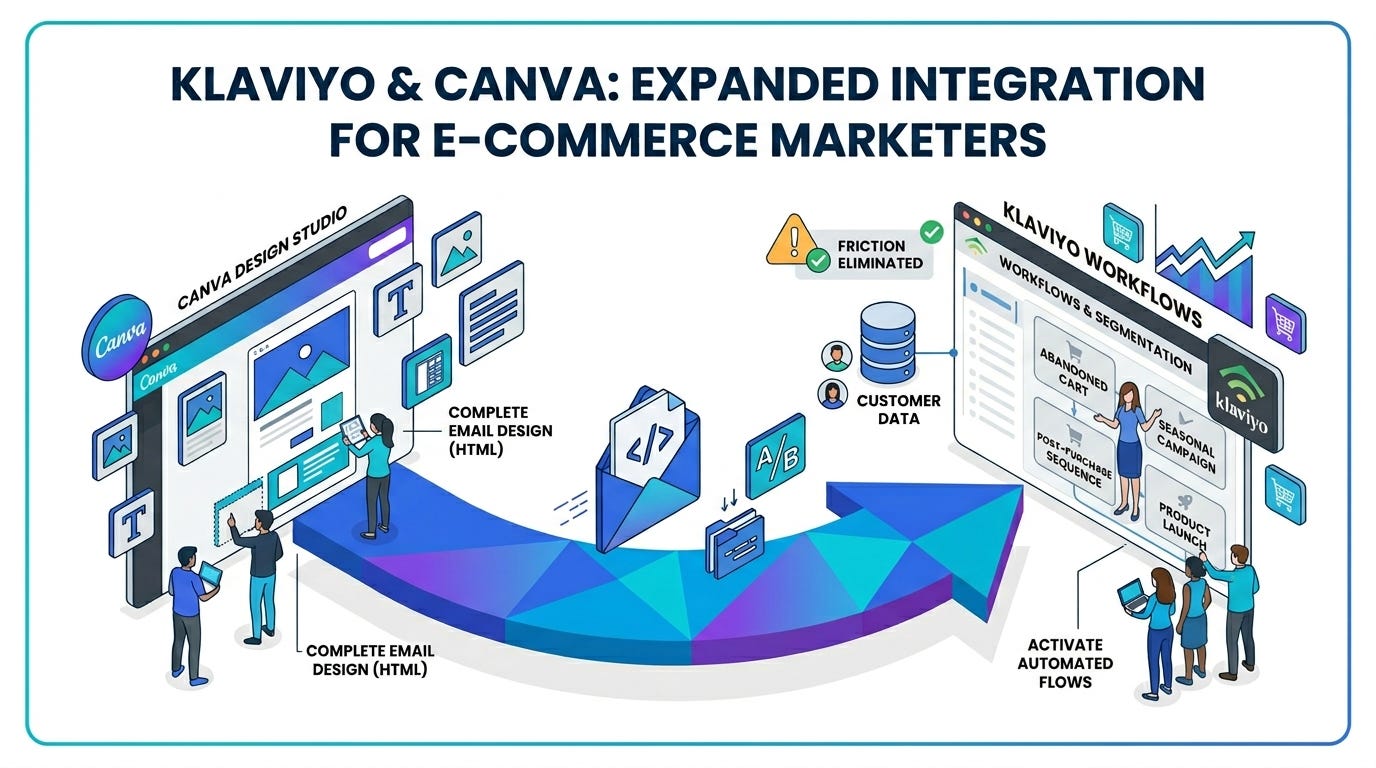
On April 16, Klaviyo closed that gap. The expanded Canva integration now pushes full email layouts — not just images — from Canva directly into Klaviyo’s Template Library. One click. No HTML export. No developer. No code cleanup.
More than 1 in 5 Klaviyo customers already use some version of this integration — that’s roughly 38,000+ brands. For most of them, Tuesday-to-Friday just became Tuesday-to-Tuesday. But here’s the part nobody’s talking about: the workflow underneath the tool is what actually decides whether you get a 4x lift or just prettier emails going to the wrong people.
That’s what this newsletter is about.
Rebuilding your Canva-to-Klaviyo workflow and not sure where the real bottleneck is? I’ll sit with you on a 30-min call, look at how your team currently moves from idea to sent campaign, and flag the steps worth removing (and the ones you should keep).
→ Book a Free 30-Min Strategy Session
What Actually Changed on April 16
The old integration (mid-2024 onwards) only synced individual images from Canva into Klaviyo’s Image Library. Useful, but limited. Full email layouts required exporting HTML, hand-cleaning the CSS, re-uploading, and praying the mobile view didn’t collapse.
The new version pushes complete HTML email templates directly into Klaviyo. Find them at Content → Templates. Fully editable in Klaviyo’s HTML editor the moment they land.
A few limits to flag upfront — because most brands will hit these within the first week:
Templates arrive as HTML, not drag-and-drop. Klaviyo is building HTML-to-drag-and-drop conversion, but it isn’t live yet. If your marketer can’t read HTML, post-import edits will be painful.
Dynamic data doesn’t survive the export. No product feeds, no personalization tokens, no discount code blocks. Those get added in Klaviyo after import.
Only Canva’s Email template type exports. Your social media designs and presentations won’t.
One Canva account per Klaviyo account. Multi-brand agencies will need to disconnect/reconnect manually.
Free and Pro Canva users both get it. No tier gate.
The New Workflow, Step by Step
Setup is a five-minute OAuth. Each export afterwards is about three clicks.
One-time setup (in Canva):
Open a Canva Email design (not a social post, not a presentation)
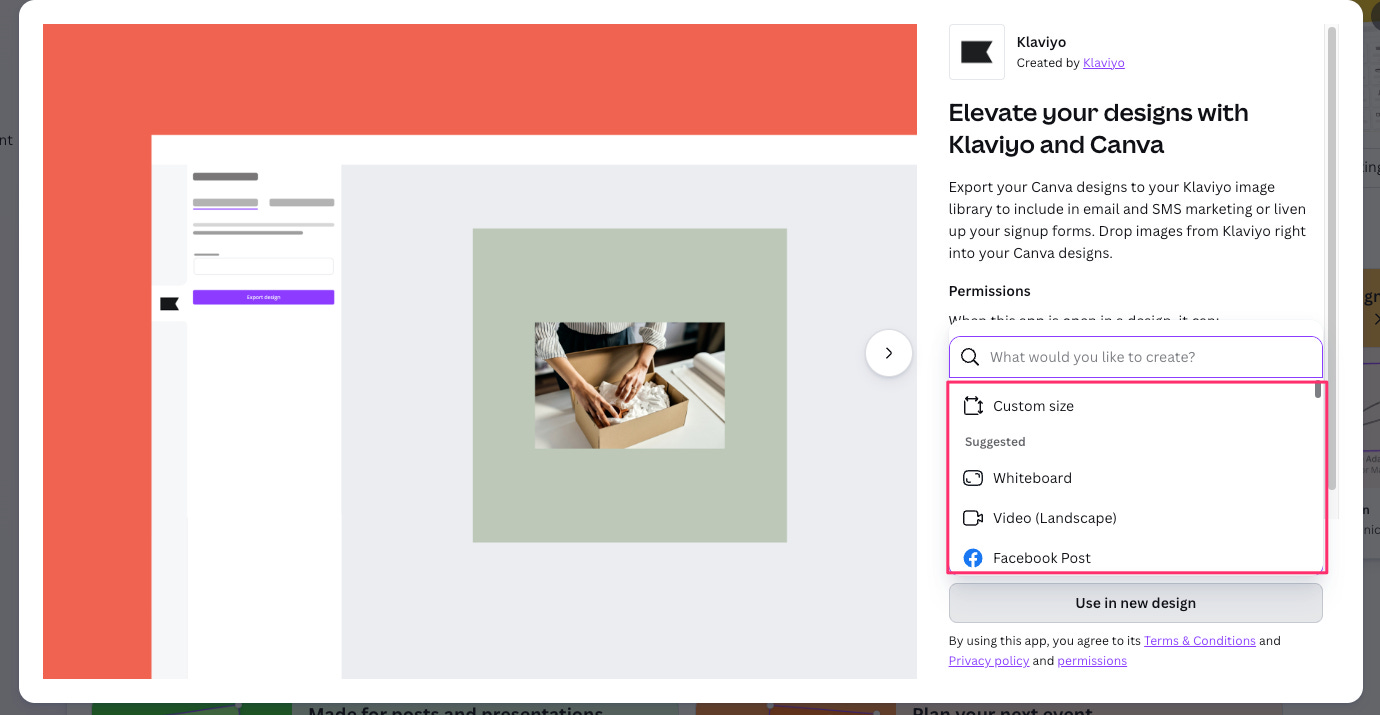
Click Share → click the Klaviyo icon
Hit Connect account → enter Klaviyo credentials → Allow
Each export:
In Canva, click Share → Klaviyo icon
Pick the page you want to export
Name the template, click Publish now
Open Klaviyo → Content → Templates → it’s there
In Klaviyo, after import:
Add first-name tokens, personalization, conditional content
Drop in dynamic product blocks, coupon code blocks, anything data-driven
Attach to a segment, schedule
The team split is the part most brands won’t restructure — and that’s where the speed actually comes from.
Designer works entirely in Canva. No Klaviyo login. Brand aesthetics, layout, imagery, typography.
Email marketer receives the template inside Klaviyo. They’re not waiting for a file. They’re not Slacking about a mobile bug. They open Klaviyo, add the data layer, segment, send.
That’s the shift. The designer doesn’t need Klaviyo access. The marketer doesn’t need Canva access. The handoff is a shared template library, not a hand-off.
The Hybrid Model — When Canva-First Wins, When It Wrecks You
Here’s the part most “this new integration is amazing” articles skip.
Canva-first is a campaign tool. It is not a flow tool.
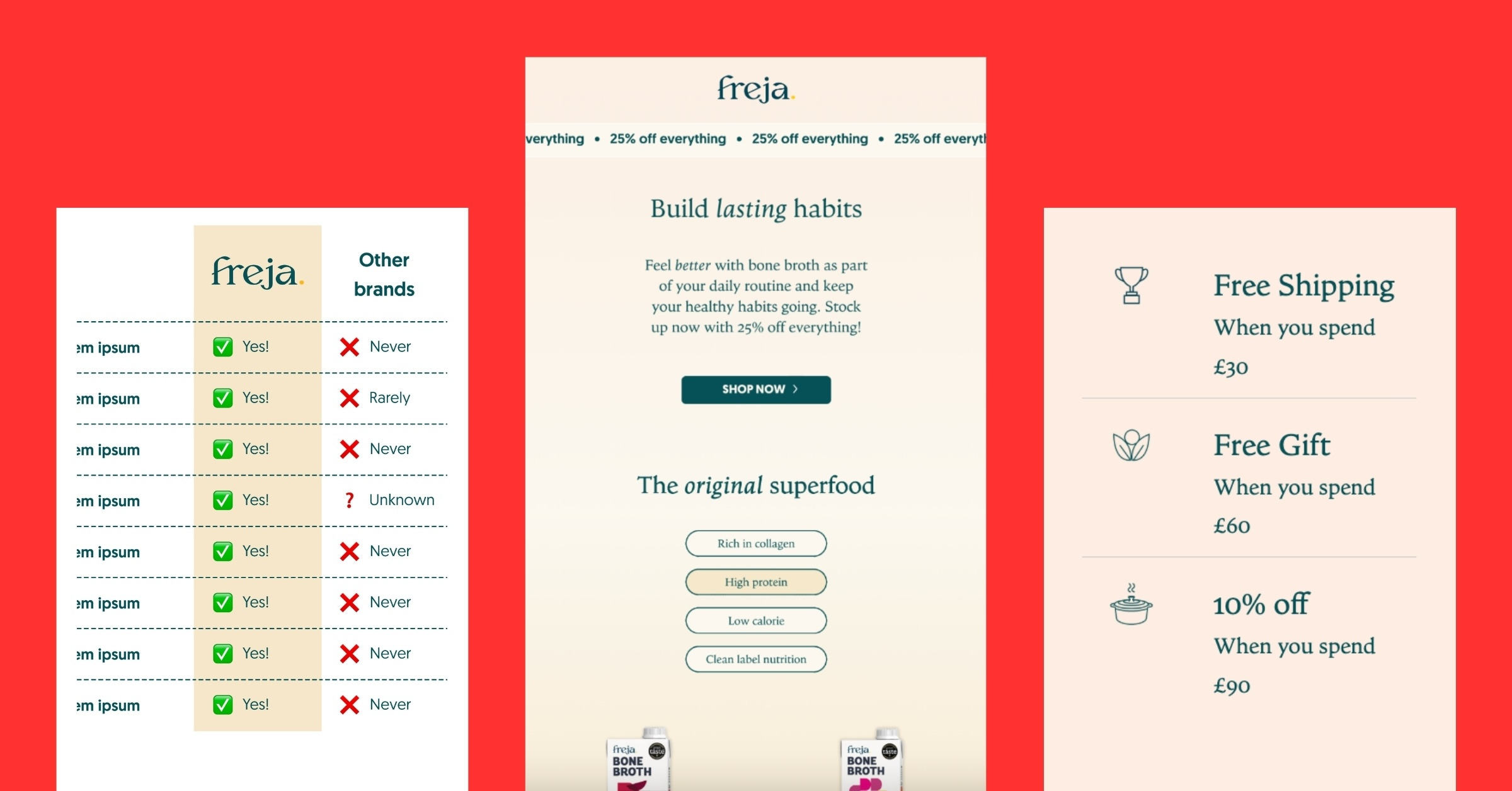
Tribe Studio — a Klaviyo-specialized agency in the UK — has been running Canva + Klaviyo workflows for clients like Freja Foods, Mother Root, and Bold Bean since well before the April update. Their findings map cleanly onto how brands should think about this now:
Use Canva for: brand-specific elements Klaviyo’s native editor can’t handle cleanly — custom fonts, unique button styles, editorial layouts, “us vs. them” comparison tables, hero banners, content-heavy sends.
Keep in Klaviyo natively: anything that needs subscriber data. Abandoned cart product blocks. Dynamic product recommendations. Discount code blocks. Post-purchase order details. Personalized content splits by VIP tier.
Freja Foods’ custom brand font wasn’t supported in Klaviyo’s native editor. Canva locked it in as a visual element — their emails stayed recognizably Freja, and Klaviyo handled the automation logic underneath. Mother Root did the same with specific button designs and structured comparison sections. Bold Bean went further: Klaviyo handled all their abandoned cart logic and dynamic product blocks while Canva owned the brand layer on top.
That’s the hybrid. And this is the line from Tribe Studio that I’d tape to the wall of any marketing team adopting this workflow:
“The real winners will be the brands that go beyond aesthetics and focus on how emails are delivered — how flows are configured, how engagement signals are leveraged, and how automation is fine-tuned.”
Beautiful emails are table stakes now. The lift comes from what sits underneath them.
The Composer + Canva Combo (The Real Speed Story)
One more piece that’s flying under the radar.
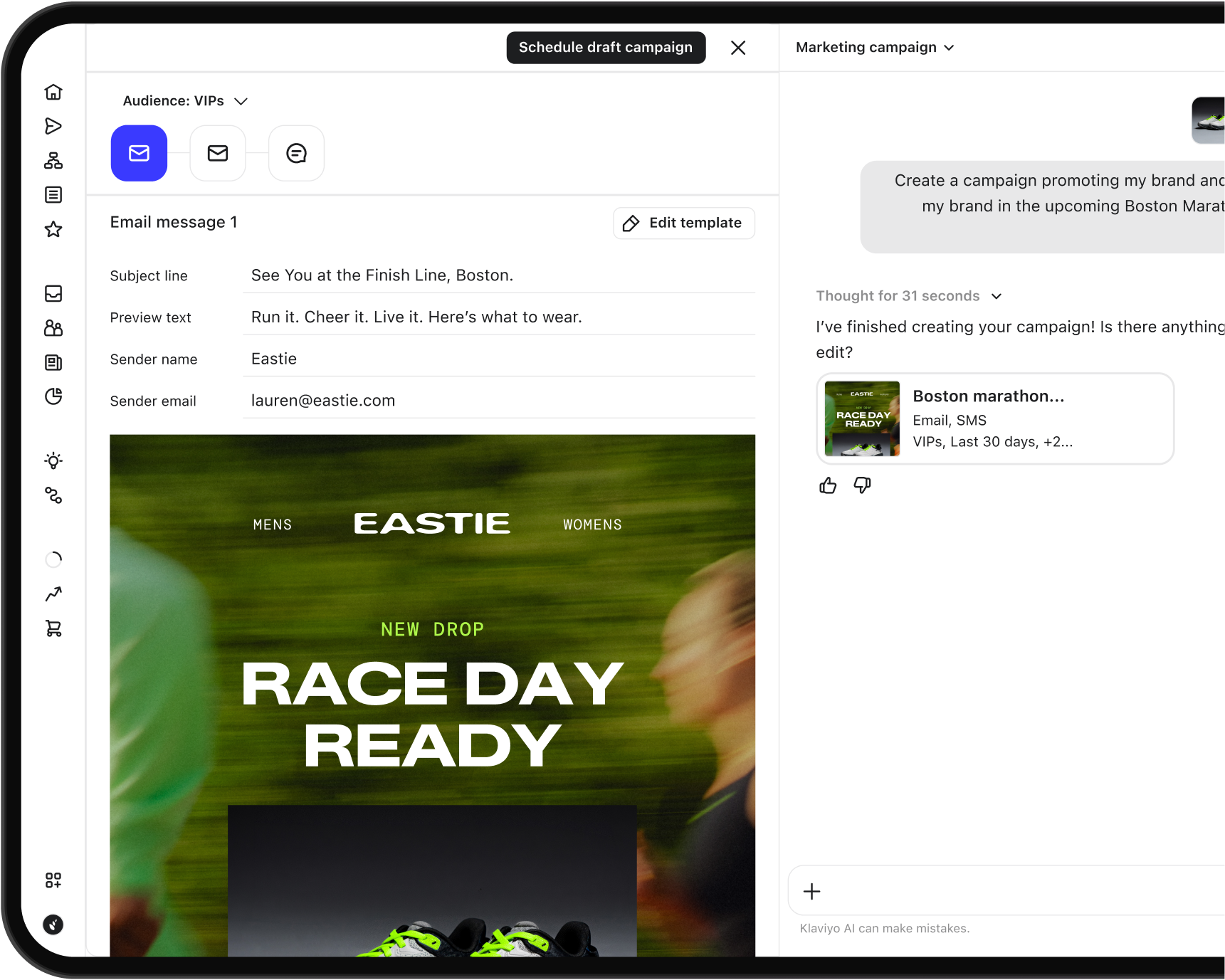
Klaviyo quietly launched Composer on March 24 — their AI agent for campaign generation. It’s currently in private beta. Marketer types: “Build me a fun spring re-activation campaign targeting lapsed customers across email and text.” Composer builds: audience segments, email and SMS copy, subject lines, send timing, send logic. All in minutes. All based on 14+ years of Klaviyo’s marketing intelligence.
Now stack that with the Canva integration:
Composer generates the strategy and copy — segments, subject lines, messaging
Canva handles the visual execution — designer drops the copy into brand-right layouts
Klaviyo runs it — personalization, dynamic blocks, automation logic
Idea to launched campaign in under an hour. That’s genuinely new.
But here’s the honest take from Hustler Marketing, one of the sharpest Klaviyo-focused agencies on the block:
“If you let Composer ‘run everything,’ your marketing will get generic fast. If you use it to generate 3-5 campaign directions, refine based on your data, test aggressively — it becomes a serious advantage.”
Same warning applies to Canva-first workflows. Speed without judgment scales mediocrity. That’s Andrew Bialecki’s (Klaviyo’s co-CEO) own framing — “The execution layer in software is moving from humans to agents. What matters now is having both the agents that do the work, and the infrastructure that gives them the full picture of the customer.”
The tools are getting faster. The strategy gap is getting wider.
The Five Mistakes Brands Are About to Make
I’ve watched enough tool rollouts to know how this goes. Here are the five I’ll bet money most brands will make in the next 90 days:
1. Using the Canva integration for flows. Tempting. Wrong. Flow emails live on dynamic data — product feeds, discount codes, personalized recommendations. None of that survives a Canva export. Using Canva for flows means manually re-adding every dynamic layer on every update. Canva for campaigns. Klaviyo-native for flows. That’s the rule.
2. Forgetting personalization after import. Templates arrive as static HTML. First-name tokens, conditional blocks, product blocks — none of it exists in the export. “Hello [first_name]” as literal text in a sent email is the kind of error that costs trust and hurts deliverability.
3. Designing for Canva’s canvas, not for email clients. Canva’s preview is not Gmail. Or Outlook. Or Apple Mail. Custom fonts, complex CSS animations, multi-column layouts — they can all break in real inboxes. Stick to simple layouts. Design mobile-first. Always preview inside Klaviyo before sending.
4. Treating design speed as the bottleneck when segmentation is the real problem. This is the big one. A beautifully designed email blasted to your entire unsegmented list will underperform a plain email sent to a sharp segment. Every time. Campaign Monitor’s number on this hasn’t changed: 760% more revenue from segmented vs. non-segmented campaigns. The integration removed your design bottleneck. It did nothing for your audience strategy. That part is still entirely on you.
5. Conflating “connected” with “integrated.” OAuth takes five minutes. Actually building a workflow — brand guidelines baked into Canva templates, a review process that doesn’t bottleneck, a Klaviyo template library that stays organized, a naming convention designers and marketers both follow — takes intentional setup. Most brands will click “Connect,” send two campaigns, and call it integrated. It isn’t.
The Bottom Line
The April 16 integration closed the production gap between designer and marketer. That’s real. 38,000+ brands just got faster overnight.
But the 760% lift from segmentation is still sitting in the same place it was last week. So is the 4x revenue from well-configured flows. So is the deliverability damage from emailing unengaged people prettier versions of the same irrelevant content.
Canva handles speed. Composer handles strategy layer one. Klaviyo handles the data. What’s left — the segmentation logic, the flow architecture, the engagement rules, the testing discipline — is the part that actually moves revenue. And no integration is going to do that work for you.
Fix the workflow. Fix the foundation. Then let the tools make you fast.
Beautiful emails are table stakes now. Sharp segmentation, flow architecture, and engagement rules are where the revenue actually lives. If you want to see how your specific business maps onto the Canva + Klaviyo + strategy stack, let’s talk. 30 minutes, no pitch, no pressure.
→ Book a Free 30-Min Strategy Session
Talk soon.
— Sahil